What makes a stay genuinely eco
The questions we ask owners before a place joins the eco collection — and the answers that keep it out.
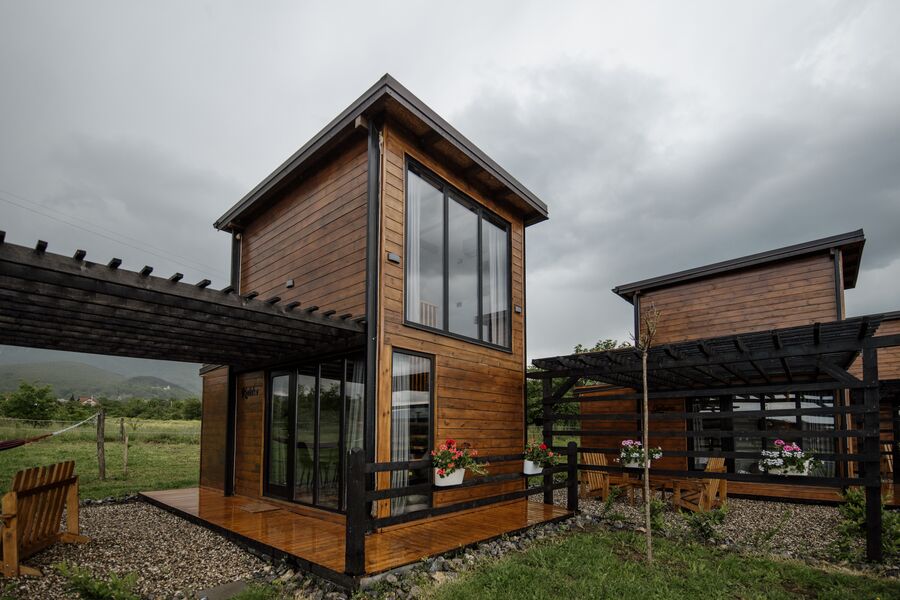
Eco is the least regulated word in accommodation. A house can call itself an eco retreat because it has a recycling bin and a view of a tree. We use the word on nine properties out of the whole collection, and we would rather explain what it means to us than defend it as a slogan.
Energy: where does it actually come from?
The question is not whether there are solar panels, but what share of the year they cover and what happens when they do not. Our eco listings fall into three honest categories: fully off-grid with battery storage and a generator for emergencies; grid-connected with panels that produce more than the house uses across a year; and grid-connected on a certified renewable tariff. All three are defensible. What we will not do is describe the third as off-grid.
Water is the harder problem
In much of southern Portugal water, not carbon, is the binding constraint. We ask whether the house is on a borehole or mains, whether there is rainwater collection, where the grey water goes, and whether the garden is planted with species that survive an Alentejo August without daily irrigation. A house with a large lawn and a filled swimming pool in the middle of a drought is not an eco retreat, however many panels are on the roof.
Heating and the wood question
Wood heat is renewable in the way that matters here: it is local, it is a by-product of managing cork and pine woodland, and it does not travel. We ask where the firewood comes from and prefer owners who buy from within a few kilometres or from their own land. Wood smoke is not harmless, so we also ask about the stove itself — a modern closed stove burns a fraction of the fuel of an open fireplace and puts far less into the valley air.
The building itself
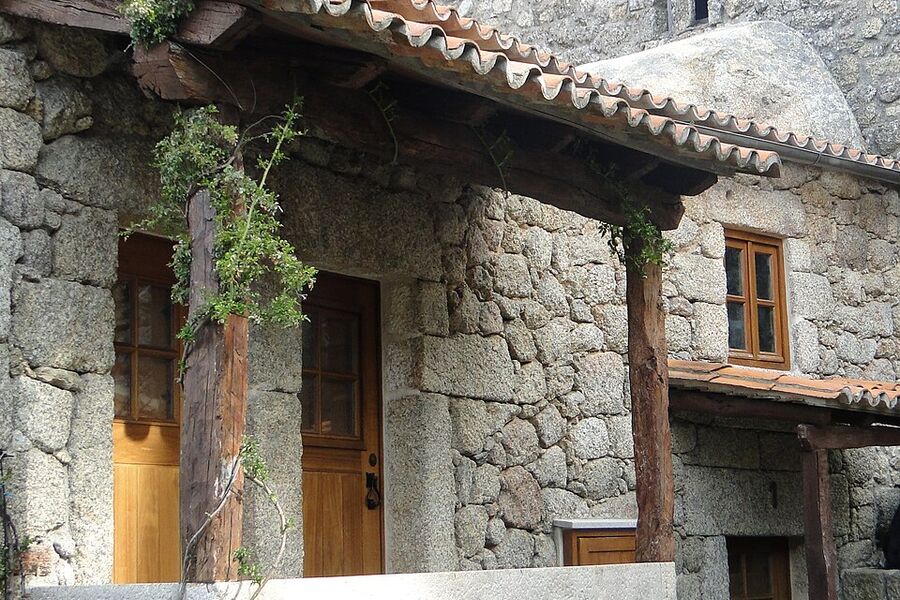
The greenest house on our list is usually the oldest one. A restored schist or granite house with thick walls, small windows and a new roof carries almost no embodied carbon compared with a new build, and it keeps a village lived-in. Where owners have built new, we ask what they built with, where it came from, and what happened to the ground underneath.
What we do not claim
- We do not certify anything. We are not an eco label and we do not audit; we ask questions, visit, and write down the answers.
- We do not offset your drive. Getting to rural Portugal is usually the largest part of the footprint of a stay, and buying a certificate does not undo it. Staying longer and driving less does.
- We do not describe a house as eco because it has bamboo toothbrushes.
What you can ask us
For any property in the collection we will tell you, in writing before you commit, how it is heated, where its electricity comes from, whether the water is metered or from a borehole, and how far the firewood travels. If the owner has not answered a question yet, we will say that instead of guessing. If any of it matters to your choice, put it in your booking request and we will get you the specifics for that particular house.